Leave Your Message

What Is Steel Pipe and What Are Its Types?

Steel Pipe is one of the quiet structures supporting modern life. It carries water beneath streets, oil across fields, and gas through carefully monitored networks. Its round profile is not accidental. The shape distributes pressure efficiently and helps the pipe resist external forces. Yet steel pipe is not a single product. Its performance depends on manufacturing method, steel grade, wall thickness, diameter, and surface treatment.

Cyril Stanley Smith, a respected metallurgist and materials historian, wrote, “The history of metals is the history of civilization.” His observation fits Steel Pipe remarkably well. From early welded tubes to today’s seamless products, pipe technology has developed alongside construction, energy, transportation, and public infrastructure. This article will examine the main types, including seamless, welded, galvanized, carbon steel, and stainless steel pipe. Each type has a different purpose. A thin-wall pipe may suit a low-pressure application, while a thick-wall product is needed for demanding service.

The distinctions can feel technical at first. They matter in practice. A visible weld seam may influence inspection choices. A rough surface can affect flow or coating life. Even a small dimensional error may complicate installation. Standards also vary by application and region, so product selection should never rely on appearance alone. I have found that simple labels sometimes hide difficult decisions. This guide will explain those decisions clearly, while recognizing one limitation: no single pipe type is ideal for every project.
What Is Steel Pipe and What Are Its Types?

Steel Pipe: Definition, Structure, and Key Characteristics

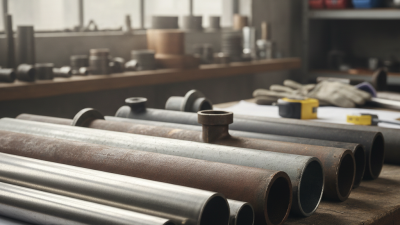
Steel pipe is a hollow cylindrical product made from steel, designed to carry fluids, gases, or structural loads. Its basic structure includes an outer wall, an inner bore, and a longitudinal axis. Wall thickness and outside diameter determine much of its strength and service capacity. A pipe with a thick wall usually resists pressure better, but it also weighs more and costs more to handle.

Manufacturers produce steel pipe through seamless or welded methods. Seamless pipe is formed from a heated steel billet and has no welded seam. Welded pipe is shaped from steel plate or coil, then joined along its length. Each type suits different conditions. Pipe selection depends on pressure, temperature, corrosion exposure, connection method, and installation location. Carbon steel offers strength and practical affordability. Stainless steel provides stronger corrosion resistance in demanding environments. Alloy steel can retain useful performance under higher temperatures.

Details matter.

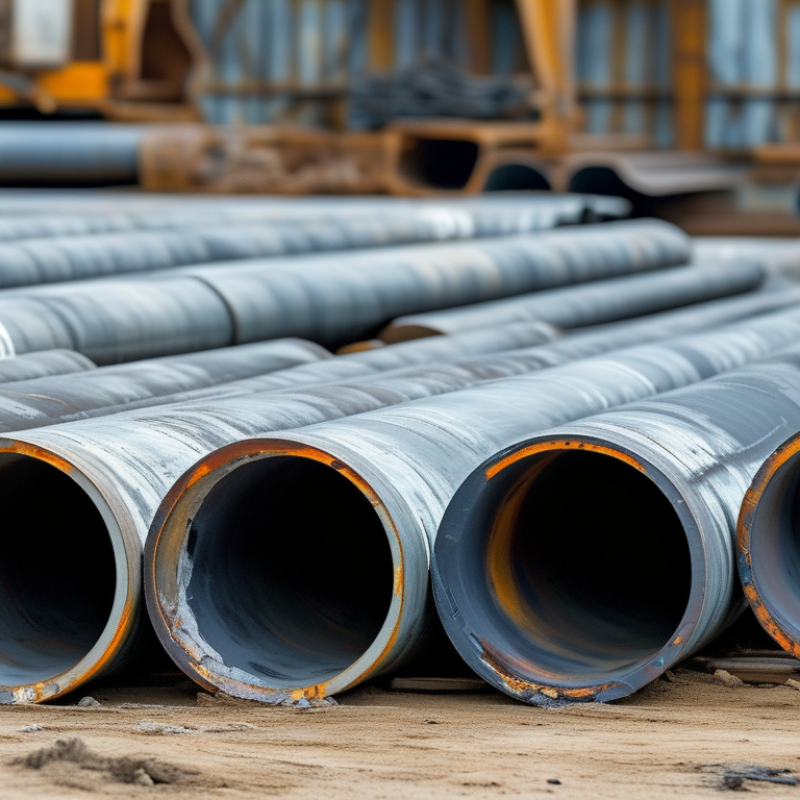
During field inspections, surface rust may look minor, yet it can hide deeper wall loss. Measuring only the outside diameter is not enough; technicians should check thickness, ovality, straightness, and visible weld quality. Standards and test reports help verify chemical composition and mechanical performance. However, paperwork cannot replace careful inspection. A common mistake is treating every steel pipe as interchangeable. That assumption can fail when pressure cycles, soil conditions, or temperature changes exceed the original design.
How Steel Pipes Are Manufactured Step by Step

What Is Steel Pipe and What Are Its Types?
How Steel Pipes Are Manufactured Step by Step

Steel pipe begins with carefully selected raw material. Carbon steel, alloy steel, or stainless steel may be used, depending on strength and corrosion requirements. Manufacturers inspect the steel for chemical consistency and surface defects. A clean surface matters.

For seamless pipe, a round billet is heated until it becomes workable. A piercing tool pushes through the center, creating a hollow shell. Rollers then stretch and reduce the shell to the required diameter. For welded pipe, steel strip passes through forming rolls. The edges meet along the length and are joined by controlled electric or high-frequency welding. The weld area is inspected because it can become a weak point if heat control is poor.

After forming, the pipe may receive heat treatment to improve toughness and relieve internal stress. Sizing rolls correct its outside diameter and wall thickness. Cutting equipment produces specified lengths, while end finishing prepares the pipe for connection. Inspectors commonly use ultrasonic testing, magnetic testing, visual checks, and hydrostatic pressure testing. These methods can reveal cracks, incomplete welds, or leakage.

The final pipe is measured, marked, and protected against handling damage. In real production, the sequence is not always perfectly linear. A failed inspection may send a pipe back for repair or rejection. That inconvenience protects workers and improves service reliability. Steel pipe types differ mainly by manufacturing method, steel grade, wall thickness, and intended application.

What Is Steel Pipe and What Are Its Types? - How Steel Pipes Are Manufactured Step by Step

Category Type or Manufacturing Step How It Works Main Characteristics Common Uses
Steel Pipe Types Seamless Steel Pipe A solid round billet is heated and pierced to create a hollow tube, then rolled or drawn to the required dimensions. No longitudinal weld seam; suitable for demanding pressure and temperature conditions. Production is generally more complex and costly than welded pipe. Oil and gas service, boilers, heat exchangers, pressure systems, and mechanical components.
Electric Resistance Welded (ERW) Pipe A flat steel strip is formed into a cylindrical shape, and electrical resistance heat joins the edges along the longitudinal seam. Efficient production, consistent dimensions, and a straight weld seam. The weld area may be tested and heat-treated according to the required specification. Water lines, structural applications, machinery, fencing, and lower-to-medium diameter pipelines.
Spiral Submerged Arc Welded (SSAW) Pipe A steel strip is helically formed around a cylindrical shape, while the spiral seam is welded using submerged arc welding. Can produce large-diameter pipe from relatively wide steel strip. The helical seam provides flexibility in manufacturing diameter and length. Large water transmission lines, piling, drainage systems, and certain low-to-medium pressure applications.
Longitudinal Submerged Arc Welded (LSAW) Pipe A heavy steel plate is formed into a cylindrical shape, and the longitudinal seam is welded by submerged arc welding. Uses plate-forming processes such as U-ing and O-ing or equivalent forming methods. The weld is commonly inspected using nondestructive testing. High strength and large wall thickness capability; suitable for demanding large-diameter pipeline service. Transmission pipelines, structural columns, offshore structures, and large-diameter fluid service.
Manufacturing Process 1. Raw Material Selection Steel billets, slabs, plates, or coils are selected according to the required grade, diameter, wall thickness, strength, and service conditions. Chemical composition and material certificates are reviewed before production. Ensures the finished pipe meets the intended mechanical and corrosion-resistance requirements.
2. Cutting and Surface Preparation Plates, strips, or billets are cut to size. Scale, rust, oil, and other surface contaminants may be removed before forming or piercing. Clean surfaces improve forming accuracy and weld quality. The preparation method depends on the raw material and the pipe manufacturing route.
3. Heating or Cold Forming For seamless pipe, billets are heated before piercing. For many welded pipes, steel strip or plate is formed mechanically at room temperature or after controlled heating. Temperature and forming pressure are controlled to achieve the required shape without excessive distortion. The process affects dimensional accuracy, grain structure, residual stress, and surface condition.
4. Piercing or Pipe Forming A seamless billet is pierced and elongated, while welded-pipe feedstock is progressively bent into a round or helical tubular shape. Rolls, presses, or piercing mills control the outside diameter and initial wall thickness. This step establishes the basic geometry of the pipe before sizing and finishing.
5. Welding, When Applicable The adjoining edges are joined by processes such as electric resistance welding or submerged arc welding. Welding parameters, heat input, alignment, and filler material are controlled to produce a sound joint. Seamless pipe does not contain a welded seam; welded pipe requires weld inspection and, when specified, heat treatment.
6. Sizing and Straightening The pipe passes through sizing rolls or other equipment to achieve the specified outside diameter, wall thickness, roundness, and straightness. Dimensional tolerances are checked during and after forming. Accurate dimensions support reliable joining, installation, and pressure performance.
7. Heat Treatment and Finishing Depending on the grade and specification, pipe may be normalized, quenched and tempered, stress relieved, beveled, trimmed, or surface treated. Heat treatment can refine the microstructure and adjust strength, hardness, toughness, and residual stress. End finishing prepares the pipe for welding, threading, coupling, coating, or direct installation.
8. Inspection, Testing, and Marking Finished pipe is examined for dimensions, surface defects, weld integrity, and mechanical properties using visual checks, hydrostatic testing, ultrasonic testing, radiographic testing, or other specified methods. Testing verifies that the pipe meets the applicable purchase specification and technical requirements. Accepted pipe is marked with information such as size, wall thickness, material grade, heat number, and applicable specification.

Main Types of Steel Pipe by Production Method

Steel pipe is a hollow product used to move fluids, support structures, and protect cables. Its performance depends heavily on how it is made. Production method affects strength, wall uniformity, size range, cost, and inspection requirements. In practical projects, choosing the steel grade alone is not enough.

Seamless pipe begins with a solid steel billet. The billet is heated, pierced, and rolled into a hollow tube. It has no welded seam, which can benefit high-pressure and high-temperature service. Electric resistance welded pipe forms from a flat steel strip. The edges meet and fuse through electrical heat and pressure. This method produces consistent dimensions and suits many water, structural, and general industrial applications. The weld zone still needs careful inspection.

Large-diameter pipe may use longitudinal submerged arc welding. A formed plate is welded along its length, often with strong control over penetration and alignment. Spiral welded pipe uses a helical strip, allowing efficient production of long, wide pipes. It can be practical for water transmission and foundation work. Yet, a simple production chart can mislead. Actual service conditions matter more than appearance. Engineers should check pressure, temperature, corrosion exposure, joint quality, and dimensional tolerances. Visual inspection may reveal surface dents, but it cannot confirm internal flaws. Ultrasonic or radiographic testing may be necessary. No method is perfect. Overspecification can waste money, while weak selection can create maintenance problems.

Steel Pipe Classifications by Material, Shape, and Application

What Is Steel Pipe and What Are Its Types?

Steel pipe is a hollow product used to carry fluids, support structures, or protect cables. Its classification begins with material. Carbon steel offers strength and reasonable cost for general construction. Stainless steel resists rust in wet, chemical, and food-processing environments. Alloy steel contains added elements for heat resistance, toughness, or high-pressure service. Material choice is not a guess.

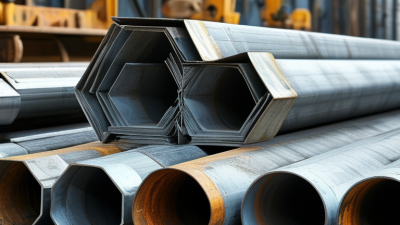
Shape also affects performance. Round pipe carries pressure efficiently and remains the most common form. Square and rectangular sections suit frames, railings, and architectural supports. Pipes may also be seamless or welded, depending on manufacturing method. Seamless pipe has no longitudinal weld, while welded pipe can provide consistent dimensions and efficient production. The difference matters under demanding conditions.

Application determines the final specification. Water systems require suitable corrosion resistance and clean internal surfaces. Structural projects focus on load capacity, wall thickness, and connection methods. Boilers and process lines may require stronger steel, tighter tolerances, and documented testing. A common mistake is choosing by diameter alone. Pressure, temperature, fluid chemistry, and installation conditions must also be reviewed. The best selection process can still be imperfect.

Tips: Confirm the material grade, outside diameter, wall thickness, and pipe length before ordering. Request inspection records and dimensional checks. Look for dents, cracks, rough welds, and visible corrosion. When pressure service is involved, ask a qualified engineer to verify the design and testing requirements.

Standards, Sizes, and Selection Factors for Steel Pipes

Steel pipe is a hollow cylindrical product made from carbon steel, alloy steel, or stainless steel. Its performance depends on grade, manufacturing method, outside diameter, and wall thickness. Welded pipe suits many general services, while seamless pipe is often selected for demanding pressure or temperature conditions.

Standards define more than dimensions. ASTM A53 commonly covers general mechanical and pressure applications, while ASTM A106 addresses high-temperature service. Pipeline projects may refer to API 5L or ISO 3183. European projects can use EN standards.

These documents specify chemical composition, tensile strength, testing, tolerances, and inspection requirements. A certificate should match the actual heat and pipe marking. Check this carefully.

Sizes require equal attention. NPS and DN describe nominal size, but the outside diameter may remain fixed across different schedules. Schedule 40 and Schedule 80 have different wall thicknesses and pressure capabilities.

Selection should consider fluid type, operating pressure, temperature, corrosion allowance, welding method, and local design codes. A pipe carrying hot water may need a different grade from one carrying abrasive slurry. Small details matter.

One common mistake is choosing by diameter alone. That approach can create excessive weight, poor flow, or unsafe wall stress. It is also easy to over-specify material and inflate costs. Reviewing calculations, service records, and test requirements together produces a more defensible choice.