 Angle Steel
 Channel Steel
 Universal Beam (l-Beam)
 H-Beam Steel
 Galvalume Steel Coil
 Galvalume Steel Sheet
 Galvanized Steel Sheet
 Color Coated Plate
 Stainless Steel Bar
 Stainless Steel Pipe
 Steel Bar
 Wire Rope
 Carbon Steel Pipe
 Carbon Steel Plate
 Aluminum Plate
 Aluminum Coil
 Aluminum Pipe
 Aluminum Bar
 Magnesium Ingot
 Fasteners
Leave Your Message
-
Phone:+86-18365798883
-
E-mail:admin@sdxyy.cn
-
Whatsapp:+8618365798883
-
WeChat

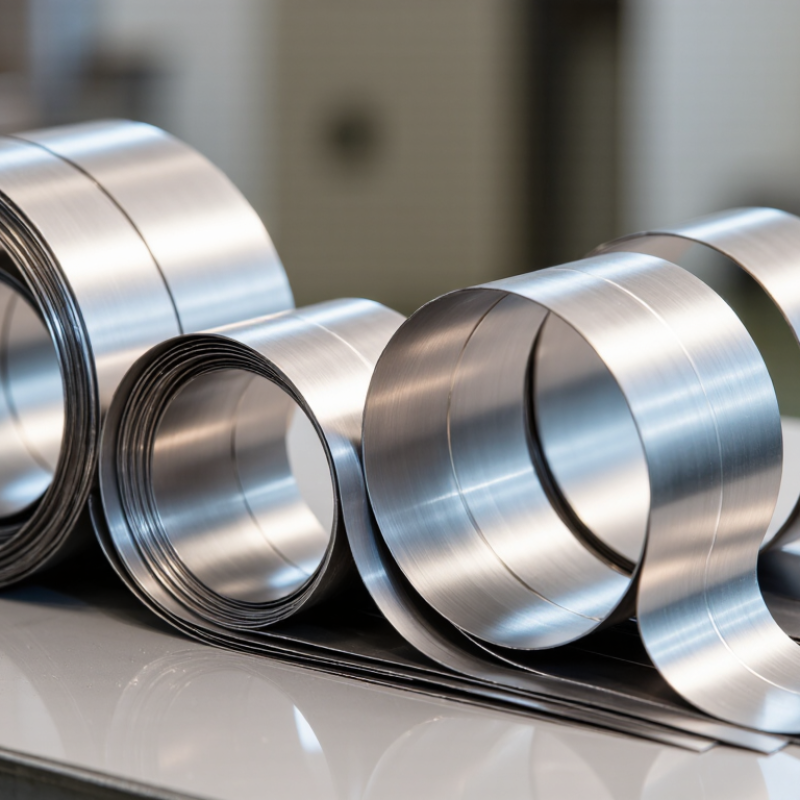
Stainless Strips are narrow, flat products made from corrosion-resistant steel alloys. They are usually cold-rolled, slit, and supplied in coils or straight lengths. Their bright surface can resemble a thin steel ribbon, but their performance depends on grade, thickness, finish, and edge quality.
According to worldstainless, global crude stainless steel production reached approximately 58.4 million tonnes in 2023. That scale reflects demand across construction, transportation, food equipment, energy, and consumer products. Industry research from Grand View Research also identifies automotive, electronics, and medical applications as important stainless steel markets. These sectors use strips for more than appearance. They need stable dimensions, clean surfaces, and resistance to moisture, heat, chemicals, or repeated handling.
Small components matter.
In automotive systems, Stainless Strips can form clips, brackets, sensor parts, and trim. Electrical manufacturers use them for shielding, contacts, springs, and precision housings. Medical instruments often require narrow strip with dependable cleanliness and corrosion resistance. In kitchens and food-processing plants, stainless strip supports hinges, seals, fasteners, and fabricated edges that face frequent washing.
The exact application is rarely decided by grade alone. Engineers also evaluate tensile strength, elongation, magnetic response, weldability, and surface finish. EN 10088-2 and relevant ASTM specifications provide useful frameworks, but they do not replace application testing. A strip that performs well in dry indoor equipment may fail near salt spray or aggressive chemicals. That limitation is easy to overlook. This article examines where Stainless Strips are used, why manufacturers select them, and which material details influence reliable service.
What Are Stainless Strips Used For?
Definition and Key Characteristics of Stainless Steel Strips
Stainless steel strips are thin, continuous metal sections cut from coils or produced through precision rolling. Their thickness, width, edge condition, and surface finish can be tailored for specific components. Unlike ordinary carbon steel, stainless steel contains at least 10.5% chromium, according to ASTM A240/A240M. This chromium forms a passive surface film, helping the material resist rust and oxidation.
Typical uses include heat exchangers, automotive sensors, medical instruments, kitchen equipment, and electrical connectors. Narrow strips can fit inside small assemblies, while wider grades support panels, springs, and formed parts. Their strength, ductility, and stable dimensions make them useful during stamping and bending. They are not maintenance-free.
The International Stainless Steel Forum reported global stainless steel crude production of about 60 million metric tons in 2023. This scale reflects broad demand across construction, transport, energy, and manufacturing. However, corrosion resistance depends on chemistry, surface condition, temperature, and exposure to chlorides. A higher alloy grade is not automatically the best choice. Engineers should check ASTM requirements, forming limits, and actual service conditions before specifying a strip. A poor finish can undermine an otherwise suitable material.
A practical overview of stainless steel strip forms, properties, material grades, and typical applications.
| Data Dimension | Definition or Typical Data | Key Characteristics | Common Uses | Important Considerations |
|---|---|---|---|---|
| Definition | Stainless steel strip is a flat, narrow metal product produced by rolling stainless steel into a continuous coil or cut length. | It has a rectangular cross-section and is available in multiple widths, thicknesses, finishes, and tempers. | Precision components, fabrication, electrical parts, medical devices, and industrial assemblies. | Dimensions and tolerances should be selected according to the applicable product specification and end-use requirements. |
| Typical Thickness | Approximately 0.05 to 6.00 mm for many cold-rolled strip products. | Thin gauges support precision forming, while thicker gauges provide greater rigidity and load capacity. | Thin shims, clips, springs, stamped parts, brackets, and structural components. | Available thickness ranges vary by alloy, width, rolling process, and supplier capability. |
| Typical Width | Often supplied from narrow slit widths of a few millimetres to several hundred millimetres. | Narrow strip can be slit from wider coils to meet specific component dimensions. | Electronic contacts, hose clamps, precision springs, gaskets, and formed profiles. | Width tolerance, edge condition, and coil shape are important for automated processing. |
| Chemical Definition | Stainless steels contain at least about 10.5% chromium by mass, which enables the formation of a passive protective oxide film. | The passive film provides corrosion resistance and can reform when exposed to oxygen if the surface is not heavily contaminated or damaged. | Food equipment, architectural parts, chemical-processing equipment, and outdoor components. | Chromium content alone does not determine performance; nickel, molybdenum, carbon, nitrogen, and the environment also matter. |
| Corrosion Resistance | Ranges from moderate to excellent depending on alloy composition, surface condition, temperature, and exposure environment. | Resistance is generally higher than that of ordinary carbon steel in many atmospheric and wet environments. | Marine fittings, water-handling equipment, kitchen components, heat exchangers, and process equipment. | Chlorides, stagnant moisture, crevices, acids, and high temperatures may cause staining, pitting, or crevice corrosion. |
| Mechanical Strength | Strength varies considerably by grade and condition. Cold working can substantially increase the strength of austenitic grades. | Stainless strip can be supplied in annealed, quarter-hard, half-hard, three-quarter-hard, or full-hard conditions. | Springs, clips, retaining rings, brackets, wear parts, and load-bearing formed components. | Strength, elongation, and hardness must be evaluated together because higher strength may reduce formability. |
| Formability | Annealed austenitic grades generally provide very good bending, drawing, and stamping performance. | Low-carbon grades and suitable tempers can improve fabrication performance and resistance to certain forms of sensitization. | Deep-drawn containers, kitchenware, stamped covers, tubes, diaphragms, and formed brackets. | Bend radius, rolling direction, surface finish, and work hardening should be considered during design. |
| Spring Properties | Cold-worked stainless strip can provide high yield strength and elastic recovery. | Good fatigue resistance and dimensional stability are available in suitable grades and tempers. | Flat springs, contact springs, clips, washers, sensors, and precision mechanisms. | Spring performance depends on thickness, temper, grain direction, heat treatment, and operating temperature. |
| Surface Finishes | Common finishes include bright annealed, brushed, satin, polished, and standard cold-rolled finishes. | Finish affects appearance, reflectivity, cleanability, friction, and surface corrosion behavior. | Decorative panels, appliance parts, sanitary equipment, medical components, and visible trim. | Surface roughness and finish designation should be specified because visual descriptions can vary between standards. |
| Grade 304 | A widely used austenitic stainless steel containing chromium and nickel, commonly selected for general corrosion resistance. | Good formability, weldability, and resistance in many indoor and mildly corrosive environments. | Food-processing equipment, kitchen components, architectural trim, tanks, and general fabrication. | Less resistant to chloride-induced pitting than molybdenum-bearing grades such as 316 or 316L. |
| Grade 316L | A low-carbon austenitic grade with molybdenum for improved resistance to chlorides and many chemical environments. | Good corrosion resistance, weldability, and suitability for demanding wet or chemically exposed applications. | Marine hardware, chemical equipment, pharmaceutical equipment, medical components, and sanitary systems. | It is not immune to corrosion; concentration, temperature, crevices, and surface contamination remain important. |
| Grade 301 | An austenitic stainless steel commonly used in cold-worked conditions when high strength and spring properties are needed. | Excellent work hardening response and good forming capability in softer conditions. | Clips, springs, brackets, railway components, automotive parts, and stamped products. | Cold working increases strength but may reduce ductility and increase magnetic response. |
| Grade 430 | A ferritic chromium stainless steel that contains little or no nickel compared with common austenitic grades. | Moderate corrosion resistance, good oxidation resistance, and magnetic behavior at room temperature. | Appliance panels, interior trim, automotive decorative parts, kitchen equipment, and exhaust components. | Formability and weldability differ from austenitic grades, so it is not a direct substitute in every design. |
| Grade 409 | A ferritic stainless steel developed for applications requiring oxidation resistance and economical material performance. | Good resistance to elevated-temperature oxidation and thermal cycling in suitable service conditions. | Automotive exhaust systems, heat shields, and other high-temperature components. | Surface appearance and general corrosion resistance are typically lower than those of many decorative grades. |
| Electrical and Thermal Conductivity | Stainless steel generally has lower electrical and thermal conductivity than copper or aluminium. | Lower conductivity can be beneficial where electrical resistance, heat retention, or controlled heat transfer is required. | Resistance-heating supports, electrical contact components, thermal shields, and heat-resistant assemblies. | Electrical or thermal designs may require a separate assessment of resistivity, temperature, and contact conditions. |
| Temperature Resistance | Many stainless grades retain useful strength and oxidation resistance at elevated temperatures, but the limits vary by alloy and service conditions. | Suitable grades can withstand heat, thermal cycling, and oxidation better than many low-alloy steels. | Heat exchangers, furnace components, exhaust parts, oven components, and thermal barriers. | Long-term exposure can cause scaling, embrittlement, creep, or changes in corrosion behavior. |
| Hygiene and Cleanability | Stainless strip can provide a smooth, non-porous surface that is easy to clean when correctly finished and maintained. | It is widely used where cleanliness, low contamination risk, and resistance to repeated washing are required. | Food-processing machinery, medical instruments, laboratory equipment, commercial kitchens, and pharmaceutical systems. | Surface roughness, weld quality, cleaning chemicals, and chloride deposits affect hygienic performance. |
| Fabrication Methods | Common operations include slitting, blanking, stamping, bending, deep drawing, roll forming, welding, and laser cutting. | Processing suitability depends on grade, hardness, thickness, edge quality, and work-hardening behavior. | Custom profiles, stamped parts, precision assemblies, tubes, enclosures, and formed channels. | Tool wear and springback may be higher than with mild steel, especially when processing hardened strip. |
| Magnetic Behavior | Ferritic and martensitic stainless steels are generally magnetic; annealed austenitic grades are usually non-magnetic or weakly magnetic. | Cold working can make some austenitic grades partially magnetic. | Magnetic shielding, appliance components, sensors, fasteners, and non-magnetic precision parts. | Magnetic response should be confirmed for the specific grade and temper when it is functionally important. |
| Recyclability | Stainless steel is a recyclable metallic material that can be recovered and reused through established scrap-recycling systems. | Its long service life and material recovery potential support resource efficiency. | Construction, transportation, process equipment, consumer products, and industrial manufacturing. | Actual recycled content depends on the alloy stream, collection system, and production route. |
| Selection Criteria | Key selection factors include corrosion environment, grade, thickness, width, temper, finish, tolerance, formability, strength, and temperature. | A correctly matched strip can improve service life, production reliability, and total lifecycle value. | All applications involving forming, exposure to moisture or chemicals, heat, wear, or precision dimensions. | The final material choice should be verified against the relevant standard, design calculations, and actual operating environment. |