Top Uses of Carbon Steel Wire in Various Industries?
Carbon Steel Wire is a versatile material used across various industries. Expert John Smith, a leading figure in metallurgical engineering, states, "The applications of carbon steel wire are as diverse as the industries that use it." This highlights its significance in sectors like construction, manufacturing, and automotive.
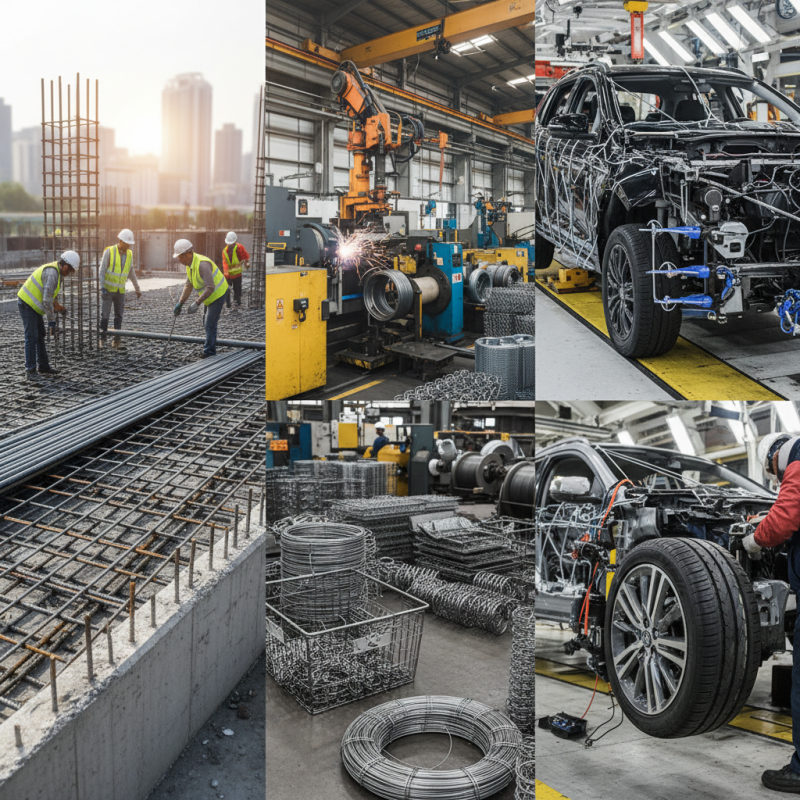
In construction, Carbon Steel Wire plays a crucial role in reinforcing concrete. It enhances the structural integrity of buildings, ensuring safety and longevity. In manufacturing, its strength and flexibility make it ideal for producing high-quality products. Automotive industries utilize carbon steel wire in making components that require durability and precision.
However, there are challenges to consider. Quality control is essential to avoid defects that could compromise a project. Moreover, understanding the specific requirements of each application can be complex. Thus, while Carbon Steel Wire is indispensable, its effective use requires expertise and careful planning.
Applications of Carbon Steel Wire in Construction Industry
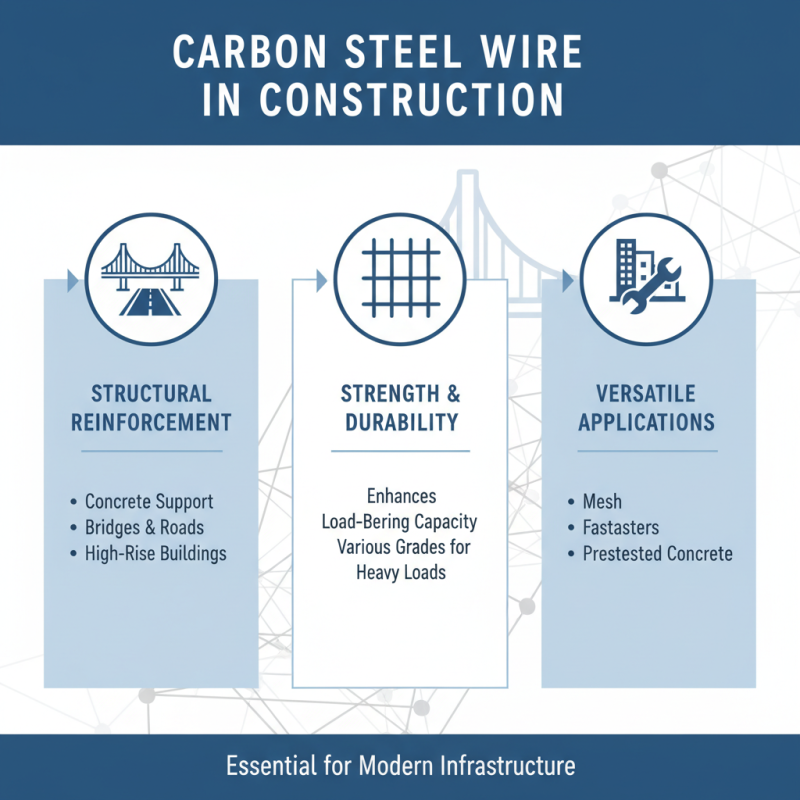
Carbon steel wire plays a pivotal role in the construction industry. Its versatility makes it suitable for various applications. One significant use is in reinforcing concrete structures. The wire provides essential strength, ensuring durability. Various grades of carbon steel wire can support heavy loads. This application is crucial for building bridges, roads, and high-rise buildings.
Additionally, carbon steel wire is integral in creating wire mesh for concrete. This mesh enhances the structural integrity of slabs and walls. The tightly woven patterns distribute stress evenly. This distribution prevents cracks and improves overall lifespan. Another common application is in the production of scaffolding. Steel wire scaffolding systems offer stability and safety at construction sites. However, improper installation can lead to issues. Builders must pay attention to installation guidelines to avoid hazards.
While carbon steel wire is invaluable, challenges exist. Corrosion can be a concern, particularly in damp environments. Protective coatings can mitigate this issue, but they require proper maintenance. Without it, long-term durability could be compromised. Understanding these details can ensure better decision-making in material selection.
Utilization of Carbon Steel Wire in Automotive Manufacturing
In the automotive manufacturing sector, carbon steel wire plays a critical role. This strong, versatile material is used for various components. Reports indicate that around 70% of automotive springs are made from carbon steel wire. Its tensile strength is ideal for this application, ensuring durability and safety in vehicles.
The wire is also integral in producing tires and brake systems. A substantial percentage of safety-critical components rely on high-quality carbon steel wire. In 2022, industry studies revealed a 15% increase in demand for carbon steel wire in automotive applications, driven by safety regulations and innovations. However, manufacturers face challenges. The competition for high-quality steel is intense, impacting cost and supply chain stability.
While carbon steel wire has proven benefits, it is not without limitations. For example, corrosion resistance can be a significant concern in harsh environments. Automotive manufacturers must balance cost with performance and reliability. This ongoing struggle leaves room for potential improvements in material science and treatment processes. Enhancing the properties of carbon steel wire could lead to even greater advancements in automotive safety and efficiency.
Top Uses of Carbon Steel Wire in Automotive Manufacturing
Role of Carbon Steel Wire in Electrical and Electronics Sector
Carbon steel wire plays a crucial role in the electrical and electronics sector. Its versatility makes it an ideal choice for various applications, from wiring to components. Engineers appreciate its excellent conductivity and strength. These properties allow for reliable connections in machinery and devices. Moreover, carbon steel wire can be easily shaped and cut, making it suitable for complex designs.
In electrical applications, carbon steel wire is often used in motors and transformers. It helps ensure efficient energy transfer, minimizing power loss. The wire's insulation can withstand heat and prevent short circuits. However, one must be cautious about corrosion, especially in humid environments. Regular maintenance is essential to prolong its lifespan.
In the electronics industry, carbon steel wire supports circuit boards and connectors. Its strength ensures durability, even in compact spaces. While it offers many advantages, manufacturers need to address potential issues like conductivity degradation over time. Balancing performance with reliability is an ongoing challenge. Overall, carbon steel wire remains a vital component in the electrical and electronics fields.
Benefits of Carbon Steel Wire in Agriculture and Farming Equipment
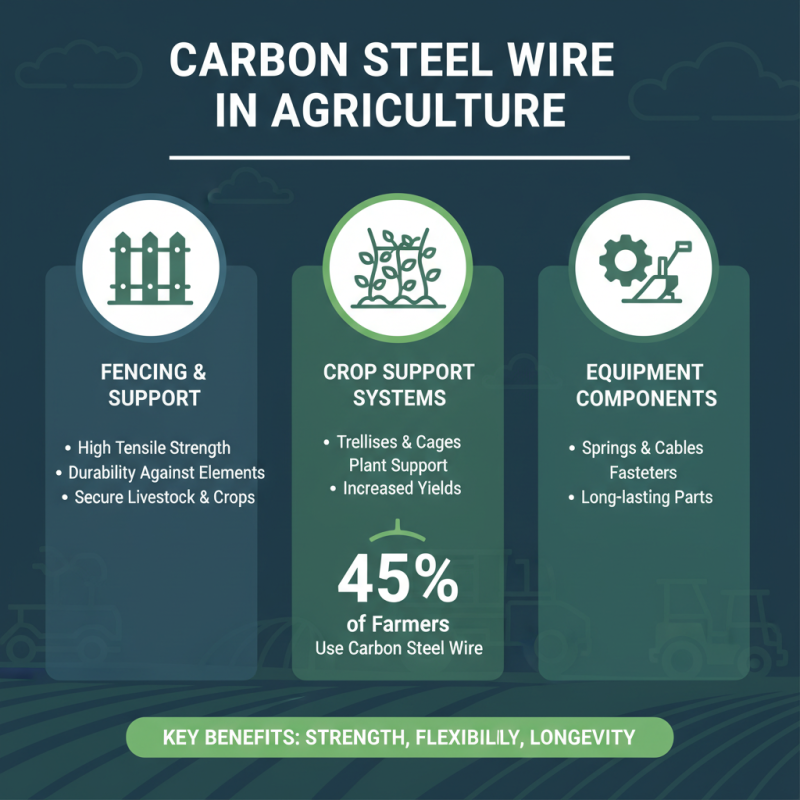
Carbon steel wire plays a crucial role in agriculture and farming equipment. Its mechanical properties make it a popular choice for various applications. For instance, the tensile strength and flexibility allow farmers to use these wires for fencing, supporting plants, and constructing trellises. According to a recent industry report, nearly 45% of farmers use carbon steel wire for crop support systems.
Using carbon steel wire offers several advantages beyond strength. This material is resistant to corrosion, especially when galvanized. This means that wires can withstand harsh weather conditions without significant degradation. A study by the Agricultural Engineering Society noted that the longevity of galvanized carbon steel wire is about 30% longer than alternatives. However, improper installation can lead to issues such as rusting, which requires careful consideration.
In addition to its durability, carbon steel wire contributes to efficient farming practices. Farmers can optimize crop yields through better plant support. This usage results in improved sunlight exposure and air circulation. Despite these benefits, some farmers express concerns about the wire's environmental impact. Eco-friendly alternatives are on the rise, prompting reflection on sustainability in agricultural practices. Ultimately, carbon steel wire remains a key material, but it invites dialogue about responsible usage in farming.
Innovative Uses of Carbon Steel Wire in Manufacturing and Fabrication
Carbon steel wire plays a key role in various industries, showcasing innovative applications in manufacturing and fabrication. Manufacturers increasingly use carbon steel wire for creating durable and cost-effective products. Its strength and versatility allow it to be molded into different shapes, making it ideal for various tasks.
In construction, carbon steel wire serves as reinforcement in concrete structures. This provides significant structural integrity. Additionally, in automotive manufacturing, carbon steel wire is essential for producing components like springs and cables. Car manufacturers rely on its resilience and resistance to corrosion. These attributes are indispensable in ensuring longevity and performance under stress.
The use of carbon steel wire in the textile industry reflects creativity. It is often used to create fine wire fabrics, which can support various designs. However, the quality of the wire can sometimes vary. Inconsistencies in thickness and tensile strength can pose challenges. Manufacturers must pay close attention to source materials and production processes. These factors can impact overall product durability. As industries continue to innovate, carbon steel wire will remain a vital resource in manufacturing.

 Angle Steel
 Channel Steel
 Universal Beam (l-Beam)
 H-Beam Steel
 Galvalume Steel Coil
 Galvalume Steel Sheet
 Galvanized Steel Sheet
 Color Coated Plate
 Stainless Steel Bar
 Stainless Steel Pipe
 Steel Bar
 Wire Rope
 Carbon Steel Pipe
 Carbon Steel Plate
 Aluminum Plate
 Aluminum Coil
 Aluminum Pipe
 Aluminum Bar
 Magnesium Ingot
 Fasteners